The Serious Mirth Society

Deliberately Making Fun.

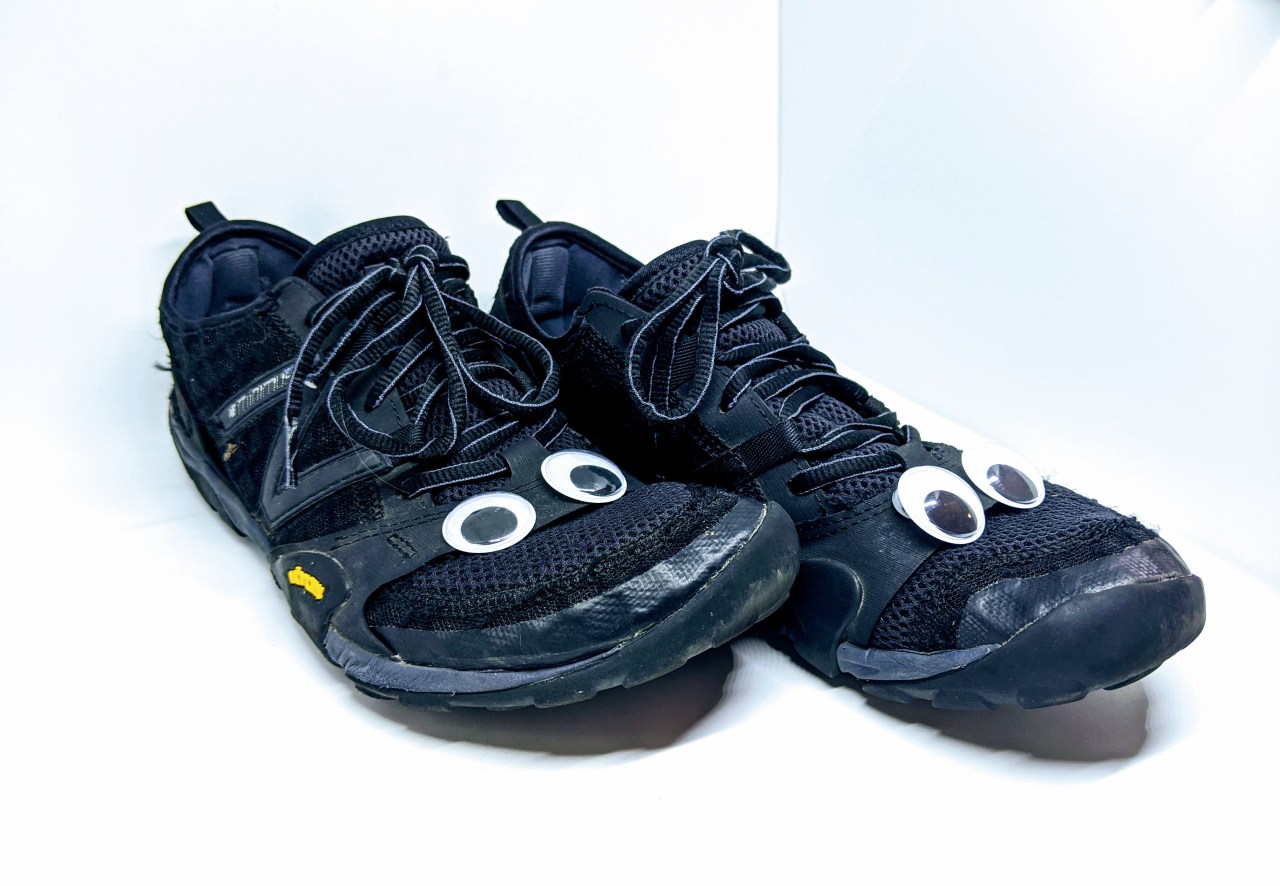
We should warn you—it can be very dangerous to stick googly eyes on things.

Not because they’re hard to put on—all it takes is a little tape—but because once you see a thing as having a face, it’s difficult to see a thing as just some-thing anymore. It becomes some-one. Which is what can make them a little hard to take off—to unsee what you’ve seen. Which is good.

And so, dangerous or not, we advise doing it anyway.

Because it’s important.

And it’s fun.

We recommend starting with something you don’t eat, like your shoes. (Though if you have a habit of nibbling your shoes, we do recommend you see a dentist. And/or a cobbler. No, not that kind of cobbler.)

But seriously, stick a pair of googly eyes to your shoes and wear them around for a while. Spend a week imagining what the world looks like to them. What the ground feels like to them. Smells like. Where did they come from before they met you? What do they think of this place? Of you? Of your feet?

At some point along the way, if you’re listening, they’ll usually tell you all sorts of things. Like maybe their names. Or what they like. Or what they don’t. Maybe one of them prefers hard concrete and the other soft grass, which will finally help you explain to your friends why you always have to walk with one shoe on and one shoe off the path. Your shoes like it that way.

What else do they like? Are they fond of they way they hug your feet? Do they feel brave when they save you from sharp-edged rocks? Do they like the whoosh when you swing your feet up in the air? And how do they feel about dancing?

This could also help explain about your dancing.

Once you see your shoes as somebodies, you’ll see the world differently. Or maybe you’ll just see more—like where you’re walking (to avoid squishing ants), or eww, whatever it was you just stepped in.

Spend a week getting to know your shoes. Because you know they didn’t just magically change when you added eyeballs. They were just as alive before. It’s you that changed. It changed how you see everything—every thing you thought was just a thing but really wasn’t.

It’s a great game to play, and there are so many levels. After you’ve gotten to know your shoes, you have our permission to start playing with your food. (Pro tips: Don’t wear your food on your feet, and don’t eat the googly eyes.)

After you spend a lot of time with your food and can effortlessly imagine what it’s like to be a lime, well, then you graduate to animals, and then, eventually, to people. Both of which, you’ll notice, already come equipped with eyeballs, so you can just imagine seeing through theirs. And since they already have mouths, when you ask them questions, you’ll be really good at listening for their answers.

And once you’ve imagined being another person and can see them more fully, maybe you can give them googly eyes to put on their shoes. Because they might be wondering about yours.
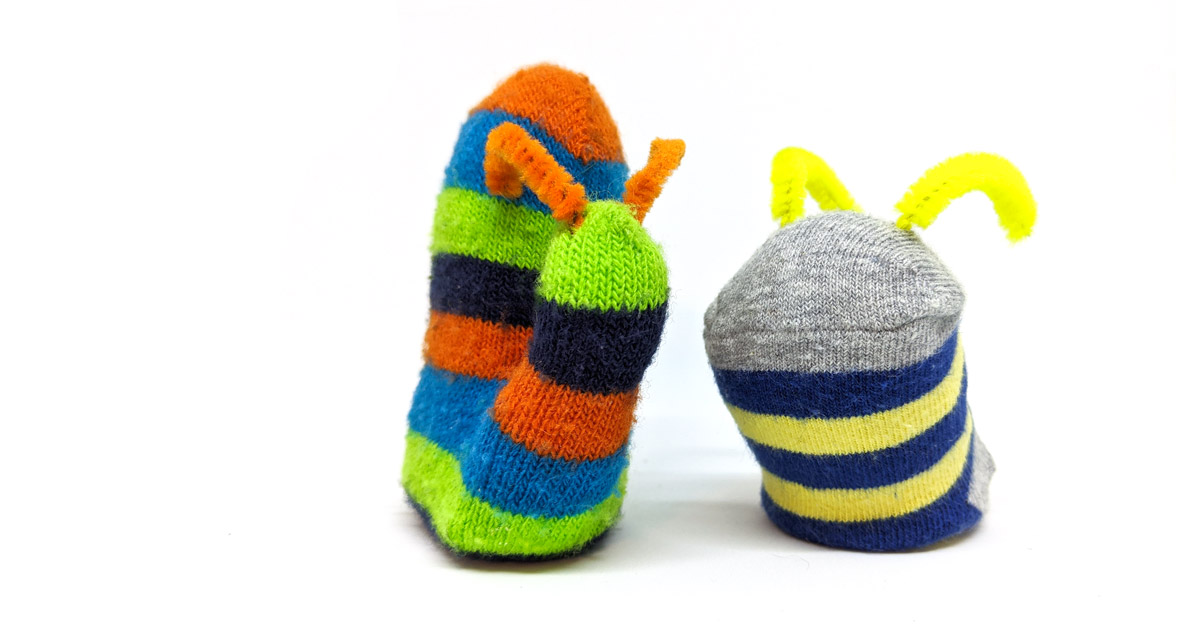

Once upon a time, a mitten and its hand parted ways. Who knows if the mitten was looking for adventure, or if it just slipped off one cold, wintery day? Alone, it sat on the side of the slushy street, wondering what would happen next. It waited.

The days passed—light and dark, snow and cold. One day, who knows how many days later, it was picked up by someone who liked its friendly, bright stripes. It was taken home, given a warm bath, and set out to dry. It waited.

The mitten was then passed to another someone as a gift. And the second someone lifted the mitten up to their face, smiled, and asked, “Who are you?” and then gently tucked it in their pocket. Nestled there in the dark, the mitten felt something tingling inside itself. “Who am I?” the mitten thought. “No one has asked me that before. I wonder… yes, I wonder.”

The mitten waited for a bit, just to be sure, but then it nudged the someone from inside the pocket to get their attention. “Psst,” it whispered up to the voice who had asked the important question. “Yes?” it inquired. The mitten said, “It’s me, here in your pocket. I am a someone, too. And I think I am not just a mitten. I think I am also a snail!” “Really?” said the someone. “That’s wonderful. Yes, I can see that about you. Is there anything you need? Are you hungry after your travels? Perhaps you would like a bit of stuffing.”

“Yes, please!” said the mittensnail. “Also,” he said, nibbling the tasty white fluff, “I believe my name is Bert.”

And then the adventure really began.

Once upon a time, a sock and its foot parted ways. Who knows if the sock was looking for adventure, or if it just slipped off one warm, spring day? Alone, it sat on the side of the grassy path, wondering what would happen next. It waited.

The days passed—light and dark, rain and wind. One day, who knows how many days later, it was picked up by someone who liked its friendly, bright stripes. It was hung on a peg in the park. “Wow,” thought the sock. “The world is really big.” It watched. It waited.

One day, a second someone stopped and lifted the little sock from its peg. “Are you alone?” the someone asked. “Yes,” said the sock, “but it is very interesting up here.” The someone looked at the sock very curiously, and then asked a very curious thing. “Are you really just a sock?” the someone asked. The sock said, “You know, I have been wondering that myself. I think perhaps I am not just a sock. I believe I am a beetle.”

The someone smiled and said, “Oh, yes, I can see that in you. If you like, you could come home with me. I think I have a friend for you, if you would like one.” “Oh yes,” he said. And so the sockbeetle was carried home, given a gentle bath, and set out to dry. It nibbled some stuffing, which was white and fluffy and quite delicious. And then the someone carried him over to a shelf where another striped creature was waiting for him.

“I’m Bert,” said the mittensnail.

“I’m Ed,” said the sockbeetle.

“I like your stripes,” they both said at the same time.

And then the adventure really began.

There are lots of ways to discover things about a person, some more intrusive and less legal than others, depending on who you are—fingerprints, dna samples, retina scans, or the simple observation of whether or not they wear argyle socks.

But a person’s laugh? It’s possibly the cheapest, quickest personality test available, and often a dead giveaway of exactly what kind of person you’re dealing with.

Laughter is a wordless language that speaks volumes. You can learn a lot about someone by what makes them laugh, and by the taste (yes, taste) of their laughter.

Say you meet someone who is sporting the aforementioned argyle socks. Say you point at them and laugh. (We don’t advise pointing, pointing is rude.) But if seeing the socks makes you laugh, do you laugh in delight? Or in derision? There’s a difference in both the shapes your face makes and in the sound that comes out of it. You know it does.

If it is the former, perhaps the delight is that you, too, are also wearing argyle socks and, after pointing, you raise your pants a bit and grin to show your new acquaintance your solidarity?

If it is the latter, however, a laugh of derision, perhaps it is because seeing those socks makes you somehow uncomfortable. Perhaps you were taught that argyle socks were bad, or perhaps you had nightmares about evil argyle socks as a child. We don’t know. But you obviously have some aversion to argyle socks and want to make sure that anyone around knows you consider argyle socks a poor fashion choice and don’t want to have anything to do with anyone who would wear them.

Laughter has flavors, more than all the kinds of flavors you can imagine. And there are a lot of things you can taste, but they aren’t all good. Some things taste pleasant, like the sweetness of ice cream or carrots (though possibly not together), and some things are better left untouched, like poison ivy. Your body will tell you pretty instantly that was a bad thing to lick. And just like putting your tongue to ice cream, your ears can taste the flavor of the laughter and know it’s good.

We recommend laughter that tastes of delight and joy and camaraderie, and of jokes that make you snort bubbles out of your nose in spontaneous explosions of hilarity. (Bubbles are often a good sign.) We recommend the flavors that laugh “with” and not “at,” laughter that offers everyone in earshot a taste of happiness.

And do you know how you tell? The litmus test for laughter is lightness. Because, like Willy Wonka’s “Fizzy Lifting Drinks” or floating Uncle Albert in Mary Poppins, the best kind of laughter lifts people up from the inside. (We told you bubbles were a good idea.)

Now there are some kinds of laughter that make the laugher feel bigger, but the laughee smaller. We don’t recommend them. They taste bitter, sharp, and somewhat rotten. The best laughter makes everything taste better. Feel lighter. Happier. More spacious. More kind. More connected.

Like a bunch of people who all just discovered in delight that they’re all wearing argyle socks, and they all feel as if they’re all floating three inches off the ground, and it’s the very best feeling in the world.

You may have noticed that The Mirth Manifesto begins with the instruction to raise one foot before commencing its recitation. We are not, in fact, just messing with you. In truth, we would like to assure you we are actually very serious about this stage direction. Taking a solemn vow is often accompanied by a physical gesture—kneeling, for example, or raising a hand, and so we felt it was not only important but very appropriate to include one of our own. (That it sounds quite official and yet also slightly odd at the same time are just added bonuses.)

When it comes to flamingos, there is very little information about why they will often stand or sleep while perched on one leg, though there is some evidence that it’s actually more stable for them. But it’s not like that for humans. Standing on one leg is usually untenable and awkward, unbalanced, and unsteady—which is precisely our point. We wanted to deliberately acknowledge the precariousness of life, how constantly things shift, how close we are all the time to tipping over if we veer too far in one direction or the other.

There is no steadiness to life—it wobbles. And yet, if we acknowledge this wobbliness, if we are willing to sway a bit with things as they shift, we can perhaps take a moment to smile at ourselves, how we stubbornly (and admirably) continue to attempt standing and shifting in the midst of everything wobbling. And more than that, we might even find a way to have a bit of a laugh at the absurdity of things, to relax a bit into the realization that the wobbliness is inevitable, even wobbly by design.

We would also like to point out that, when one is feeling unbalanced and tilting, it is the natural impulse to hold out one’s arms, to reach out for someone or something to help you balance, which is precisely why we are The Serious Mirth Society and not The Serious Mirth Hermits, despite how annoying human behavior can be at any given moment. There was some debate about this, but after much consideration, we concluded that even if we run away from each other from time to time (and often for good reason), we cannot survive the wobbliness alone. We must reach out to each other for balance, so that we can all help each other stand while all wobbling together.

It shouldn’t make sense, to have wobbling together help everyone feel more stable, but it works. And this is why, at the end of the Manifesto, we say, “This is a weird & wonderful world. It IS a laughing matter.” For this is what keeps us together, this sense of camaraderie and support and humor while everything constantly shifts around us. Without these things, we will all inevitably collapse. We are very serious about this, and so, albeit somewhat ironically, the Manifesto ends by asserting, “This is where I put my foot down.” That we must do this together is non-negotiable.

So hold on to someone (or something), lift your foot up, and then put it back down again. It may feel ridiculous, but it makes perfect sense. In truth, I suppose we are messing with you, just a little bit. But very seriously.

How beautiful the April snow
Falls from above to down below
The flurries dancing to and fro
Yet nothing rhymes with orange

The snowflakes snuggle, nesting deep
And all the cars dress up like sheep
Their wooly flocks all snug for sleep
How sad, the lonely orange

Such ease for most to find a date
Yet some must quest through endless fate
And travel still to find a mate
Roll on, intrepid orange

One of the beautiful things about the universe is that there is no sign at the entrance with a big marker that says, “You must be this tall to ride this ride.” We’re all allowed into this strange adventure in the Milky Way. Now of course there are those who think this is actually quite terrible—that we’re all permitted to show up here so small and defenseless in the first place. But when it comes down to it, “It’s a great big universe, and we’re all really puny.” Regardless of our feelings, it’s just true, and most of us spend the vast majority of our lives trying to cope with our inescapable cosmic tininess in some way or another, to varying degrees of success.

It really just comes down to a matter of perspective. How big do you need to be in order to feel okay in this great, big universe? Or safe? And what do you need in order to feel joy? How big does it need to be? The “money can’t buy happiness” record is warbly and warped from centuries of spinning around endlessly, but look—even those we call the most powerful and wealthy right now—for all their blustering, there’s a real sense they feel just as small and scared of their own mortality as the rest of us. The biggest houses are no match for the tiniest molecules.

Still, small or not, we human creatures can do things some others can not—we can intentionally choose things, even if it’s only how we decide to see. And what you see, of course, depends on what you’re looking for.

So where is there delight to be found in all this madness? We’d cheekily like to encourage you to do the exact opposite of what all the motivational speakers tell you to do—don’t think big. Think small! Look for the tiny wonders, wonders much smaller even than you. Look at the stubbornness of life in spring, breaking out of the cold ground. Look for grass growing through cracks in the cement. Watch an earthworm wander around in the dirt after rain. Find some bugs on a tree and compliment them on their shiny red coats. At home, seek out a dustball under your bed, and ask it its name.

These days were not made for “go big or go home.” These days it’s pretty much “go home no matter what.” Do what you need to, what life requires of you, with the gifts you have. But pull out an old-school magnifying glass and sleuth for the tiny delights that can be found everywhere. Take time to listen for just a while, for the smallest thing you can hear. If you’re out for a stroll, tuck up like a snail by a tree somewhere and watch the world from a ground-level view.

In the grand scheme of things, we are all tiny. And sometimes we grow a bit over the years, some of us more than others—trees, whales, fruit flies, moss, and pomegranates. The weird universal math keeps multiplying and dividing and doing things we don’t even understand. But though we are all small in varying degrees, it’s also nice to remember the words of the great poet Anonymous, who wrote:

Don’t worry if your job is small,
And your rewards are few.
Remember that the mighty oak,
Was once a nut like you.

Anonymous

Not being scientists ourselves, we are going to oversimplify this and likely incur the ire of those who actually are, but, in general terms, The Law of Conservation of Mass goes something like this:

The law implies that mass can neither be created nor destroyed, although it may be rearranged in space, or the entities associated with it may be changed in form.

Wikipedia

We at the Society recently faced a frustrating dilemma and, upon remembering this law, felt ridiculously happy as it expediently and delightfully deflated our concerns. And, technically, our dilemma didn’t even have to do with science.

It had to do with art.

We have been cheered and inspired by all the colorful sidewalk art that’s been popping up all over the place recently—people writing kind messages on their neighbors’ doorsteps and drawing pictures and other friendly things on their sidewalks for passers-by. As these things promote gladness and laughter, we at the Society wanted not only to promote this practice, but to participate in it as well! However, as mentioned earlier, not only are we not scientists, we are not fine artists either, and we feared our creative skills were not sufficient for the task. (There is a significant difference between laughing and being laughed at, and we are staunchly in favor of the former, not the latter.)

But then we remembered the Law of Conservation of Mass.

Not to put too fine a point on it, an offering of art is not actually, technically, creating anything. According to the Law of Conservation of Mass, nothing new is ever created. What we are only ever doing is one thing, and one thing only—we are rearranging things.

We laughed! We cheered! Our fear of creating sufficiently “good” art was gone. We would not create art at all—we would just merely rearrange things and see what happened.

And thus, the Department of Friendly Graffiti was born. With no time to lose, we sent forth our excited and impatient members to procure chalk and make a house call.

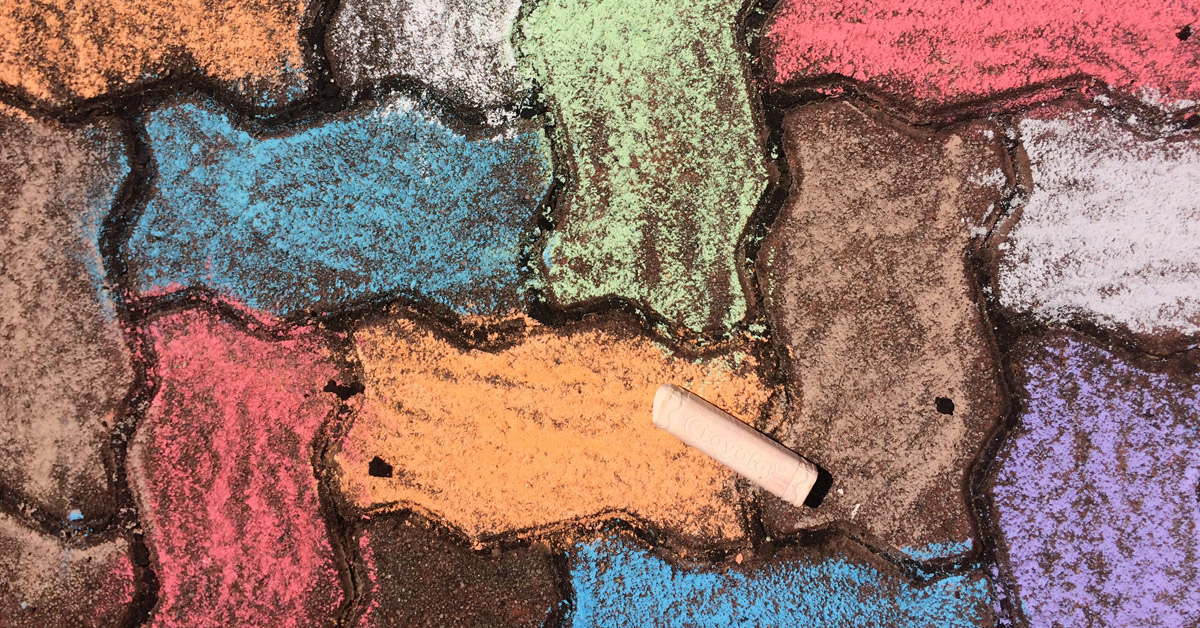
With the fear of “creating art” gone, all that remained was our desire to spread gladness and laughter and rearrange chalk pieces into different shapes. We rearranged two yellow blocks of chalk into a giant flat circle. We rearranged part of a blue block into other flat circles. We rearranged half a red block into a curved, warpy shape that looked like a smile. We rearranged a green block into several other shapes. All we did was move chalk around in ways that made us happy. And when we were finished, the chalk blocks that used to fit neatly in their box now looked like this:

The Department of Friendly Graffiti had planned to leave their work in secret, but the owner of the driveway caught them in the act—and was overjoyed to see the newly rearranged chalk. And yet even with all the huge smiles, one of the DFG members shrugged and said, somewhat sheepishly, “Well, it’s not Rembrandt.” And the driveway owner beamed and said, “It looks like Rembrandt to me!” And thus, the newly-rearranged chalk was christened Rembrandt.

And then, of course, it started to rain. And it rained some more. And then it rained even more, with a little snow and sleet mixed in for added measure, and within a few hours, Rembrandt had rearranged himself down the driveway and traveled into another new form of adventure.

And so: we at the Society would just like to encourage you, if you are nervous about your abilities at all, to cease thinking of any artistic endeavor as an intimidating undertaking of creation. Just offer your imagination and effort into rearranging pieces of the universe into shapes that bring you joy—because in a while, it will all be rearranged into something else anyway.

The betterment of one’s own education is a noble pursuit, but really, if you’d just like a good laugh sometime, subscribe to the Oxford English Dictionary’s Word of the Day email. It really is amazing, the language we humans have crafted in order to explain the universe to ourselves. And that’s just in English!

Actually, in a darkly humorous sort of way, you could look at the OED as one of the funniest books ever written, because really, it’s a sad story of how hard we keep trying to make sense of our world by naming and labeling everything and yet continue to persistently and monumentally fail to understand each other, even while trying to speak to each other in the same language.

Thus, it was horribly disappointing to me when, one morning, I received the OED’s message pertaining to the word “Hippophile,” only to discover it wasn’t what I thought it was.

“Bibliophile,” I knew, was a person who loves books. And “astrophile” seemed obvious enough—a lover of stars and astronomy. But it was very disillusioning to learn that a “hippophile” is—wait for it—a lover of horses. I suppose anyone with a rudimentary understanding of Latin would’ve gotten that, but I don’t, and so I didn’t. Horses?

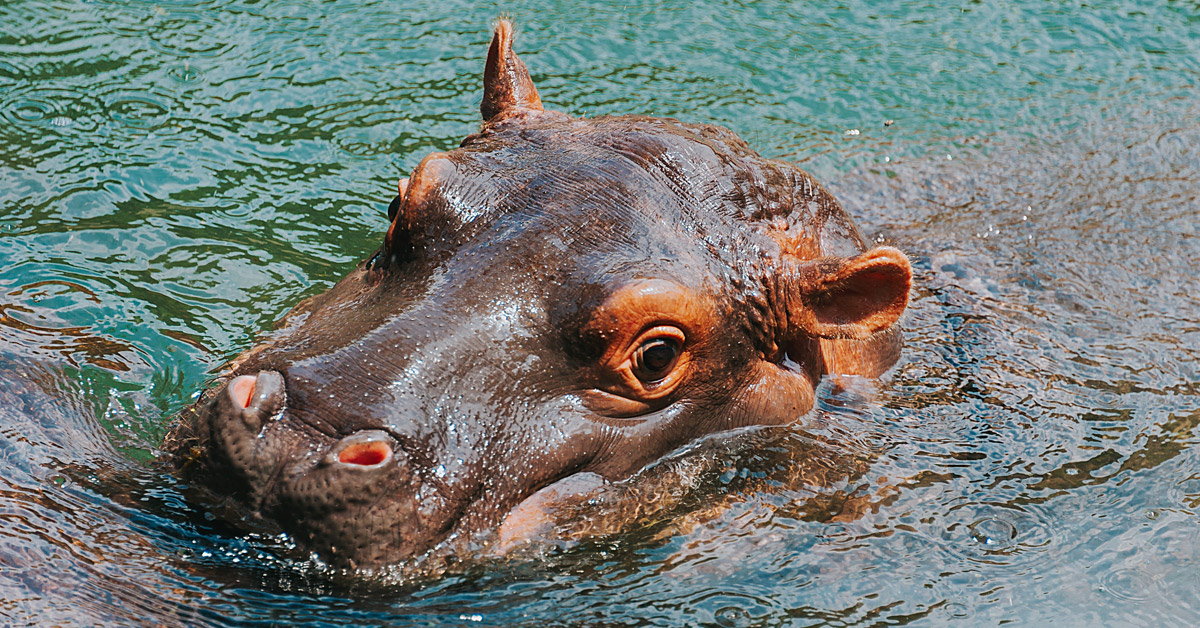
I’ll explain why this was so disheartening: I once had a conversation with a friend about what kind of dog I would get, if I were to get a dog. There was no hesitation—I would like a Shar-Pei. You know, one of those very wrinkly dogs that look like their skin got put on six sizes too big? There is just something about them that is instantly loveable to me. My friend, however, looked at me oddly and said, “Well, I suppose, but only if you think baby hippopotamuses are cute.” Well, obviously.

Hence my excitement when I saw this particular email from the OED. I remember thinking, “Oh look! There are more of us!” only to discover that while there might be more people like me, the hippophiles are not those people.

So I went searching—what do you call people who love hippos? (Note: correct plurals are technically “hippopotamuses” or “hippopotami,” both of which are lots of fun to say out loud.) I learned that “hippopotamus” is technically ancient Greek for “water horse.” I also learned that hippopotami are closely related to whales. And, also, that they’re quite dangerous. (Which is fine—I didn’t want a hippo for a pet, after all.) I also stumbled across a Latin Stack Exchange community where people studying proper Latin constructs posit that they should technically be referred to as “potamohippus,” which is also tremendously fun to say.

Nowhere, however, did I find a word that means “person who loves hippopotamuses.” Which is kind of sad, really. I think there should be a word for everything being loved, even if people say you have a face only your mother could love. But from me to you, happily, I’d like to say that even of the strangest of us can take heart. Somewhere in this universe there is someone who will absolutely adore you, even if it’s the kind of person who thinks that baby hippopotamuses are cute.

Because we’re out there.

For Further Reading: If you don’t have time to read the entire OED for yourself, please read Ammon Shea’s also-wildly-hilarious Reading the OED: One Man, One Year, 21,730 Pages. It’s truly wonderful.

We, the Bored of Directors, would like to welcome you to the first official meeting of The Serious Mirth Society. We’re delighted you’re here. Our second meeting will very likely involve hippos (so take heart), but today we want to start with the elephant in the room (not a hippo), and that’s death. It’s one thing we all inescapably have in common, one thing that will absolutely happen to all of us. At some point. (We can’t tell you when. We don’t know.) When it comes down to it, none of us have definitive operating instructions about this life box we received, except for the knowledge that it comes with an expiration date.

We’re addressing death primarily because of fear. People mostly think that death is the worst thing that can happen to us. But it’s not. The worst thing that can happen is for us to spend our time here in this infinite, wonder-full, unfathomable universe feeling mostly fear instead of balancing it out with the many other very vital options available to us. Like joy. Or laughter. If we are going to be afraid of something, we should be afraid of that—of missing out on the fullness of life.

And so, we come to our point: we are deeply concerned that too many of us are overlooking the small–but-gargantuan moments of delight that exist all the time all over the place right in the middle of everyday life. We are so troubled by this oversight that we have formed a society dedicated to promoting and perpetuating the celebration of mirth, a state of “gladness accompanied by laughter.”

We are fully aware that we are issuing this statement regarding the importance of mirth at a time when we may be criticized for doing so. Why are we discussing the importance of joy and laughter when there’s a global pandemic, when people are afraid and sick and dying, and so many things feel fragile and uncertain? Because happiness is serious. It’s vital. Fear is helpful to a point, but it’s a greedy creature, and it tends to talk too loudly, eat up all the food, and leave nothing for anyone else.

Let us be clear: we are not talking about the denial of reality and our necessary participation in caring for all life on this planet. (That would be folly—something completely different from mirth. We will discuss that later.) What we are addressing is the larger reality—that spending time mostly being afraid of death is no way to live. Give fear what it needs to stay healthy and useful, but just make sure it doesn’t shove joy and kindness out of the way in the process.

So what exactly are we supposed to do with this life we received? We can’t provide definitive answers. But our choices make things better or worse, and when we look deeply into the often-laughable, unfathomable, sometimes-ridiculousness of things, it helps. It can help tame fear into a trusty, rightly-sized pet that actually listens when you tell it to sit down.

And so, we at The Serious Mirth Society have vowed to dedicate a great deal of time to exploring the pervasive opportunities for mirth in our lives. We ask you to remember, in this time of contagion concern, that laughter and joy are also infectious, not just diseases. So while you’re doing your part to care for yourself and others in preventing the spread of a virus, we strongly suggest that you also do everything you can to spread joy and delight and kindness and camaraderie in any way you can that makes life better for everybody while we’re here.

We believe this is very, very serious. It is a matter of mirth and death.

We hope you will join us and spread the word.

(Plus, remember—next time, hippos.)